
The direct answer
Plan an automatic pedestrian entrance around the people using it, their approach routes, the available space and the responsibilities after installation. Ask a qualified door professional to assess suitable door types and site requirements. Adding an operator alone does not establish that an entrance meets accessibility, safety or building requirements.
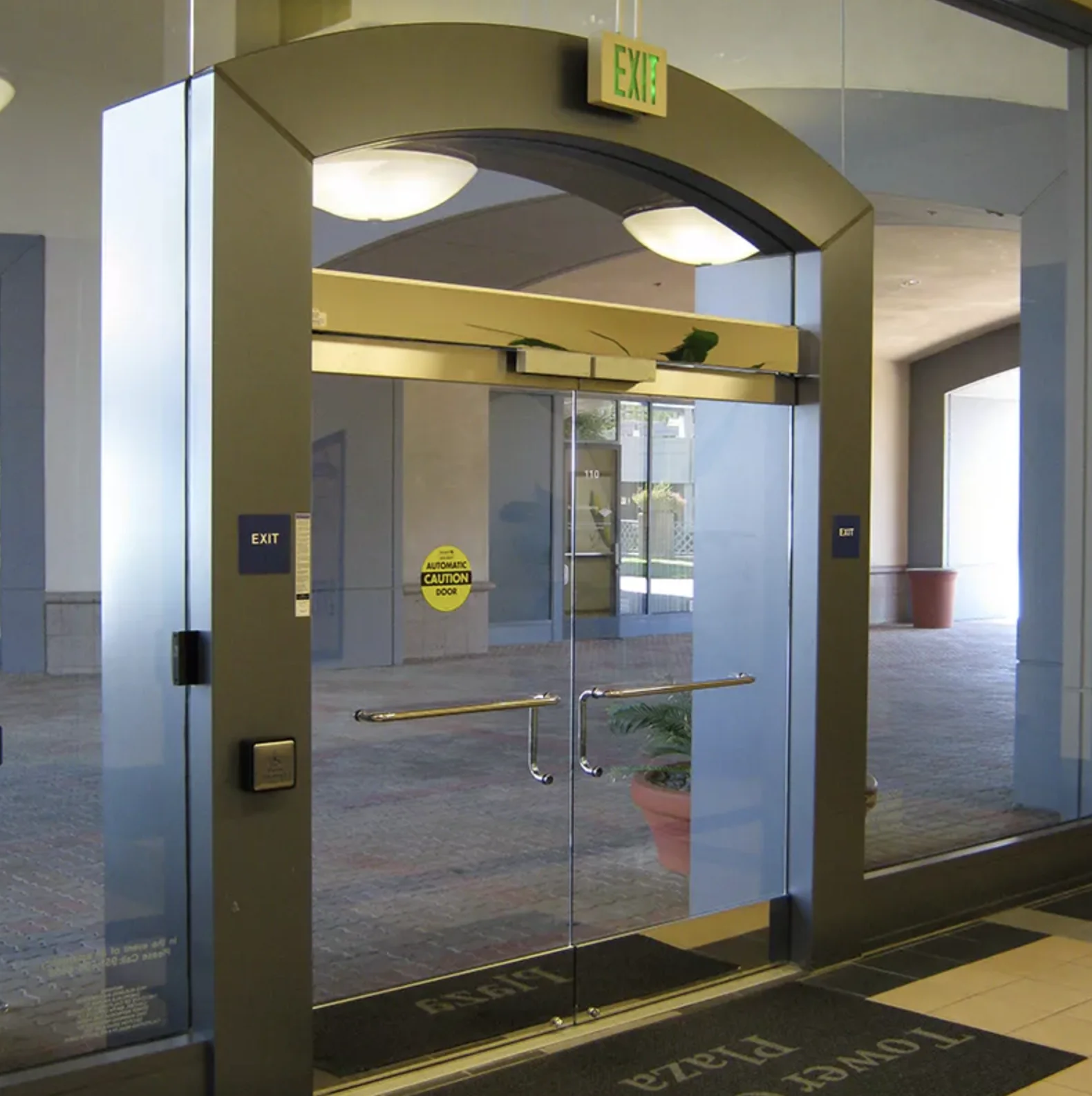
Start with the people and the entrance problem
Write down why the entrance needs attention: difficult door handling, congestion, a failing existing system or a change in building use. Identify the people who arrive, the objects they bring and the times when entry and exit overlap. Give the designer observations from the property rather than selecting an operator from a product photograph.
This guide concerns automatic pedestrian entrances. A vehicle gate, loading door and pedestrian entrance serve different purposes and should not share an assumed specification. Describe the actual opening when requesting an assessment so the conversation begins with the correct type of equipment and professional scope.
Compare movement and space before choosing a style
AAADM’s selection guide distinguishes sliding, swinging, folding and other automatic door configurations. Sliding doors can accommodate two-way movement, while swing-door planning must account for the moving panel and approach direction. These are reasons to review the building layout, not instructions to choose a configuration without a survey.
Ask the designer to show the door’s movement area and how users will approach from both sides. Discuss queues, nearby walls, furniture, reception points and adjacent doors. A mechanism that fits above the opening may still be unsuitable for the space people occupy. Request an explanation of alternatives when the existing layout limits the proposal.
Describe accessibility needs without assuming an outcome
Include users who arrive with mobility aids, pushchairs, packages or assistance from another person. Explain where someone would wait, approach a control and continue through the entrance. Ask the responsible designer to assess the complete route and coordinate any building requirements with the appropriate authority.
Automatic operation is one element of that discussion. Do not accept an accessibility or compliance conclusion based solely on adding a push plate, selecting a door brand or seeing the panel open. Ask who is responsible for the assessment, what documentation will be supplied and how unresolved site issues will be addressed before acceptance.
- Identify the expected directions of travel and busy arrival periods.
- Show where people queue, wait or turn near the opening.
- Describe items routinely carried through the entrance.
- List building-use changes that could affect the entrance after installation.
Coordinate the opening with the rest of the building
Arrange a discussion about the existing frame, door condition, available electrical supply and any access-control or building-system interfaces. Ask which equipment can be retained and which assumptions still need investigation. Assign responsibility for related work so the proposal does not leave gaps between the door contractor and other trades.
Explain how the property operates outside normal hours and who manages access permissions. Ask the professional to describe the proposed response to a power interruption or an equipment fault. Keep emergency arrangements part of the property’s wider planning; this guide does not provide a technical release, wiring or sensor-adjustment procedure.
Plan owner checks and professional inspections at handover
AAADM provides owner daily-check guidance and recommends inspection after installation and annually thereafter. Ask for the instructions appropriate to the installed door and a demonstration for the staff who will carry out their assigned checks. Retain the manufacturer’s manual instead of relying on remembered instructions or a generic online video.
Professional inspection and an owner’s routine observations have different roles. Confirm who will arrange service, record checks and respond to a fault. If movement changes or a protective-device concern arises, take the affected entrance out of service and obtain professional advice about safe access. Do not change sensor settings or bypass devices to keep traffic moving.
Make the proposal and maintenance records usable
Request an equipment schedule, a description of included work and a list of exclusions. Identify the person responsible for site preparation, power, related building work and completion documents. Ask how the proposed entrance will be demonstrated and which outstanding issues would prevent acceptance. Record answers so the next manager can understand the system.
At handover, collect model details, manuals, inspection records, support contacts and the agreed maintenance responsibilities. Give staff a clear reporting route and a place to document unusual movement or repeated faults. Include these records when property management changes; a working entrance should not depend on one person’s memory.
Use Gate Surgeon’s automatic-door service page to discuss the property and arrange an assessment. Bring the entrance brief and any available records. The service conversation can then address your existing opening and required scope rather than assuming that a listed manufacturer or a particular automatic-door style is suitable for every commercial building.
Questions property owners ask
Is a sliding entrance always better than a swinging door?
No. Compare traffic direction, available space, the existing opening and user needs with a door professional. A suitable proposal requires a property-specific assessment.
Does an automatic operator make an entrance accessible?
An operator alone does not establish that result. Have the complete entrance and approach route assessed, and identify who is responsible for applicable accessibility and building requirements.
What should the owner receive after installation?
Request equipment details, manufacturer instructions, appropriate inspection documentation, a demonstration of assigned owner checks, service contacts and a clear maintenance handover.
Continue planning
Related guide: Automatic Gate Safety and Maintenance: An Owner’s Planning Guide →
Related guide: Planning Gate Access Control: A Property Owner’s Checklist →
Related guide: Automatic Gate Remote Not Working: What to Tell Your Technician →
Related guide: Sliding vs. Swing Driveway Gates: Plan Around the Entrance →
Related guide: Solar-Powered Gate Planning: Questions Before Choosing an Operator →
Sources & further reading
This is general planning information. Use the instructions for the equipment installed at your property and discuss system-specific questions with a qualified service professional.