
The direct answer
Compare sliding and swing driveway gates by the space their full movement needs, how vehicles approach and wait, and how people use the surrounding area. A sliding gate moves along the entrance; a swing gate moves through an arc. Neither is automatically the better choice. A professional site assessment should connect the configuration to the whole entrance.
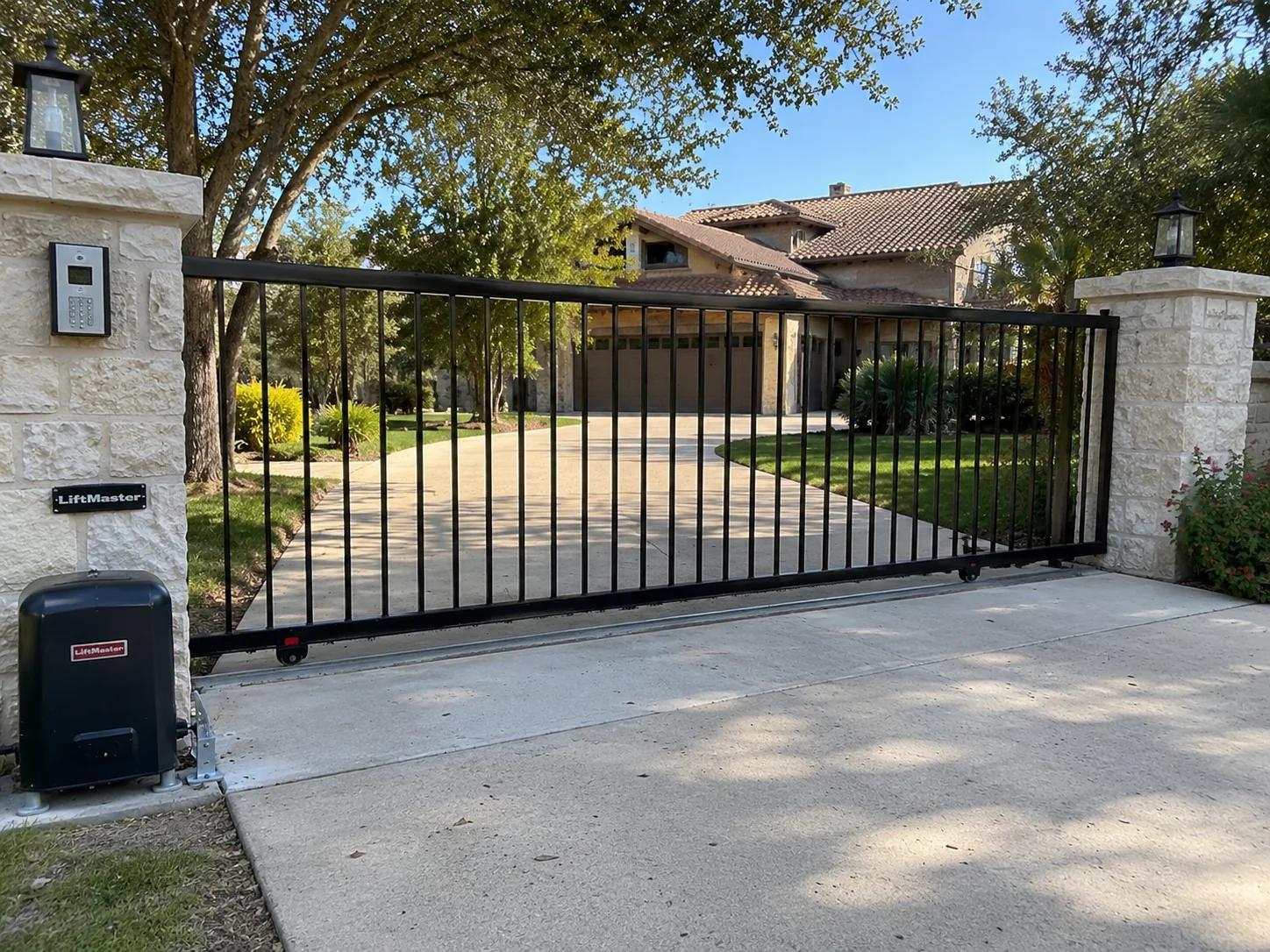
Map the space that movement will occupy
Begin with how the property is used rather than a photograph of an attractive gate. Describe the entrance, the fence or wall beside it, parking nearby and the route visitors normally take. A gate needs room throughout its movement, not simply an opening large enough for a vehicle when the gate is fully open.
Use an existing site plan or safely taken photographs to explain the layout. Ask the installer to show the proposed gate open and closed and explain the space between those positions. Site dimensions and proposed equipment need professional confirmation.
Understand the sliding-gate question
A sliding gate travels along the side of the opening. The comparison therefore needs to include the adjoining space where the gate will sit when open, the surrounding fence or wall and nearby activity. Ask the installer to identify the complete travel area on the proposal, including any supporting structure associated with the selected design.
If landscaping, a pedestrian route or parking occupies that area, identify the conflict before choosing a gate. Ask what would change and who would be responsible. Do not assume every sliding design has the same support or space requirements.
Understand the swing-gate question
A swing gate moves through an arc around its supporting side. Ask for that movement to be shown relative to waiting vehicles, nearby walls, landscaping and the driveway surface. For a two-leaf design, have the installer explain both leaves rather than treating the entrance as one moving panel.
Describe where drivers currently stop and how they approach the entrance. A vehicle should not be expected to wait in the area the proposed gate will occupy. If the driveway changes elevation, ask how the proposed configuration accounts for the actual site. This is a suitability question for the designer, not a reason to guess hinge positions or alter an existing gate.
Compare the complete daily journey
Describe the intended routine: a resident arrives, a guest requests entry, a delivery waits and someone leaves on foot. Include the vehicles expected at the property and ask what information the installer needs about them.
Pedestrian access belongs in either proposal. DASMA identifies separation of people from moving vehicle gates as part of overall gate-system planning. The moving panel and nearby fixed structures also need attention in both configurations. Ask the professional to explain how the proposed arrangement addresses the actual surroundings rather than assuming one movement type removes those responsibilities.
- Where can an arriving vehicle wait while the entrance operates?
- Which areas must remain clear for the full movement of the gate?
- How will people use a separate pedestrian route?
- Which existing walls, planting or parking areas affect the proposal?
Keep configuration separate from operator and access choices
The gate arrangement, the equipment that moves it and the method used to authorize entry are connected decisions. They are not interchangeable. A preferred keypad or remote does not establish that a sliding or swing layout fits the driveway. Likewise, choosing the panel style does not finish the power or communication planning.
DASMA’s pre-installation guidance emphasizes coordination between the gate, operator and electrical work. Ask the proposal to identify responsibilities and any retained equipment. Request written clarification of what is included, what depends on another contractor and what needs further site review. This guide does not prescribe electrical details, equipment settings or an installation method.
Use a comparable proposal brief
Give each contractor the same description of users, vehicles, entrance constraints and desired access methods. Ask them to explain why their proposed configuration fits that brief and which assumptions still need confirmation. Compare the resulting scope rather than treating the gate type alone as a promise about reliability, security or total cost.
Ask what manuals, demonstration and service information will be handed over. Retain the final plan and equipment details with property records. For an existing gate, identify what needs assessment before automation or replacement.
Gate Surgeon’s installation service page is the place to discuss a property-specific proposal in DFW. The access-control planning guide can help organize user and visitor requirements before that conversation. This comparison supports the choice of layout; it does not replace the local service page, provide a quotation or certify an entrance from photographs.
Questions property owners ask
Is a sliding gate always better for a short driveway?
No universal choice follows from driveway length alone. The installer also needs to assess lateral travel, waiting vehicles, surrounding structures and the complete entrance arrangement.
Can an existing swing gate simply become a sliding gate?
Do not assume the existing supports, gate construction or operator can be retained. Ask for a professional assessment and a proposal that identifies what changes are needed.
Which type costs less?
This guide does not provide comparative prices. Ask for proposals with comparable scope, including gate construction, site changes, operator, controls, power responsibilities and handover.
Continue planning
Related guide: Automatic Gate Safety and Maintenance: An Owner’s Planning Guide →
Related guide: Planning Gate Access Control: A Property Owner’s Checklist →
Related guide: Automatic Gate Remote Not Working: What to Tell Your Technician →
Related guide: Solar-Powered Gate Planning: Questions Before Choosing an Operator →
Related guide: Commercial Automatic Door Planning: An Owner’s Entrance Brief →
Sources & further reading
This is general planning information. Use the instructions for the equipment installed at your property and discuss system-specific questions with a qualified service professional.