
The direct answer
Solar power can be an option for a compatible gate operator, but the decision starts with the entrance, sunlight, expected use and connected accessories. Ask an installer to compare a documented solar configuration with a grid-powered alternative for your property. Do not assume that a sunny driveway guarantees adequate charging or a particular number of operating cycles.
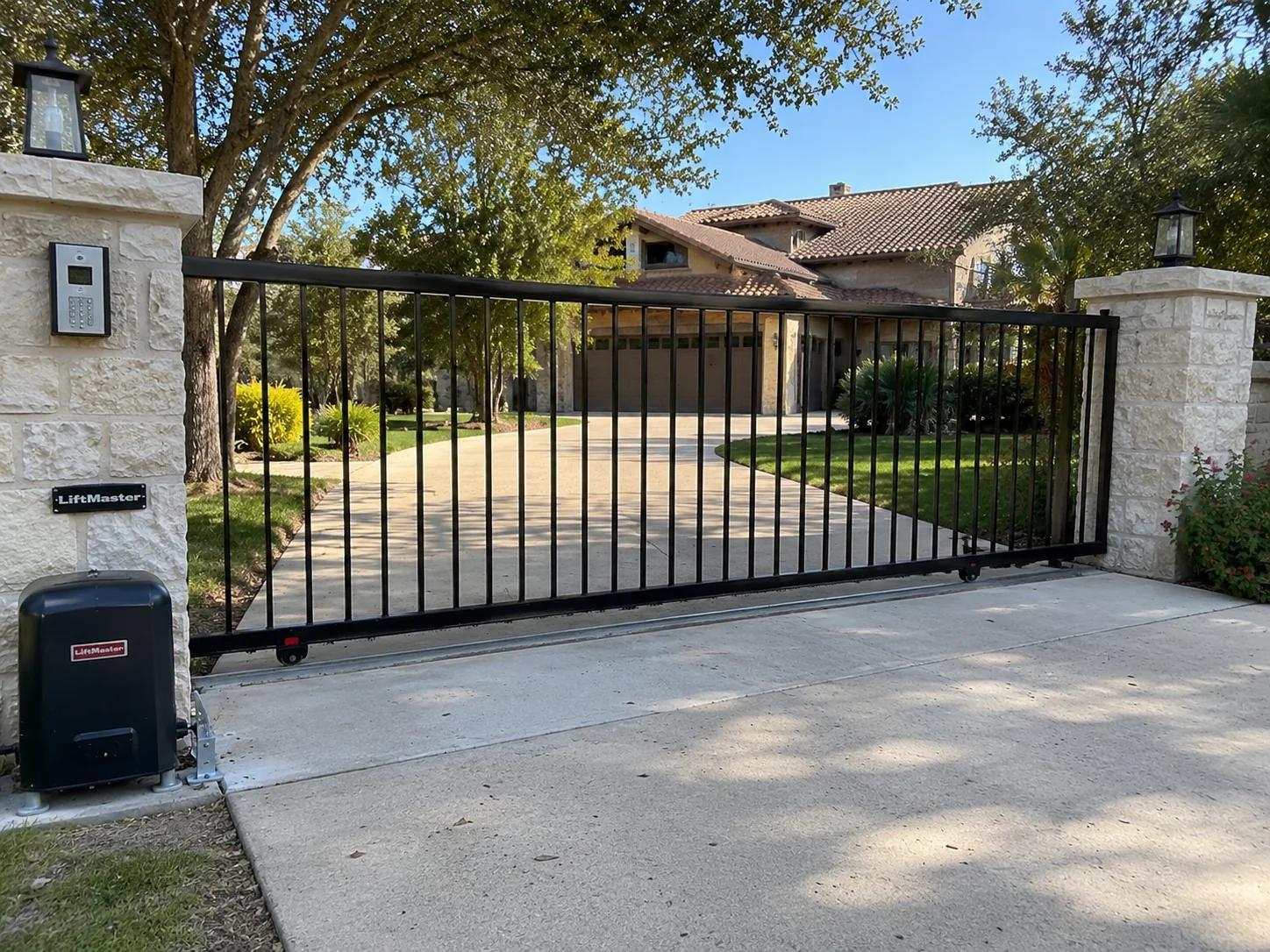
Separate the power question from the gate decision
A solar-powered gate is still a powered gate system with mechanical and safety requirements. Begin by identifying whether the existing gate moves correctly, what type of operator it needs and how the entrance will be used. Changing the charging method does not correct damaged hardware or make an unsuitable operator suitable.
LiftMaster lists solar options across particular operator models rather than offering a universal solar conversion. USAutomatic also ties equipment selection to gate type, size, weight and other constraints. Ask for the exact proposed model and configuration before comparing power sources. A brand name or a panel photograph is not a complete specification.
Give the installer a realistic picture of site conditions
Prepare photographs of the entrance and the areas being considered for equipment, taken from safe positions away from moving gates. Note nearby trees, buildings and any planned landscaping. Ask the installer to assess panel positioning and charging conditions against the selected manufacturer’s instructions rather than judging the property from a single sunny visit.
For the grid-powered alternative, identify whether an electrical supply is already available and who will assess the route to the entrance. Request a site-specific scope covering the electrical work and coordination needed. Do not treat a distant outlet or an existing buried cable as evidence that an appropriate supply is ready.
- Describe known shade, seasonal changes and planned construction near the entrance.
- Explain where equipment can be accessed for future professional service.
- Identify who will coordinate electrical and site work.
- Ask which assumptions require an on-site assessment before a quotation is final.
Describe the busiest use, not just an average day
Write down who uses the gate and when arrivals cluster. A quiet weekday, a delivery period and a gathering can create different operating patterns. Explain whether the entrance serves one household or multiple users, and whether those patterns are expected to change. These observations are inputs for the installer, not a way to calculate a universal panel size.
Include every proposed accessory in the discussion: entry controls, communication devices, protective equipment and any other powered items. Ask the installer to document which are included in the proposed configuration and how their power needs were considered. Never remove protective devices to reduce demand or make a solar proposal appear workable.
Ask precise questions about batteries and interruptions
In its product guidance, LiftMaster describes solar operation with a battery system; USAutomatic identifies charging and battery components in its packages. That does not establish interchangeable batteries or a common replacement schedule. Ask for the battery specification and maintenance instructions that belong to the actual equipment being proposed.
Have the installer explain expected behavior during reduced charging, a battery fault and any relevant electrical interruption. Request the assumptions behind any estimate of available operation. This guide promises no runtime, battery life or number of cycles. Arrange a supervised explanation of the manufacturer’s emergency provisions and keep that information with the property records.
Compare complete proposals on the same basis
Request one written scope for each viable option, using the same gate and access requirements. Separate the operator, controls, protective devices, electrical or charging work, site preparation and handover. Ask what is excluded and who is responsible for resolving each exclusion before work starts.
Compare ongoing responsibilities as well as installation scope. Who will arrange service, retain manuals and report a change in behavior? What work would be needed if access requirements change? Avoid choosing from an unsupported payback estimate or assuming that solar removes all maintenance. Keep the decision tied to the documented configuration and the property’s actual needs.
Bring a useful brief to the site assessment
Collect the existing operator model if safely visible, photographs, a description of busy periods and your intended controls. Include questions about the property’s future use. An owner’s brief helps a professional explain the trade-offs without asking you to select electrical parts or perform technical installation work.
Use Gate Surgeon’s installation service to discuss a new or replacement system in Dallas-Fort Worth. If an existing gate is moving erratically, start with a repair assessment. The safety and maintenance guide covers owner observations, while the access-control guide helps organize users and visitor permissions. Power planning should support those decisions rather than replace them.
Questions property owners ask
Can any existing gate operator be converted to solar?
Do not assume so. Ask the installer to verify the exact operator, manufacturer-supported charging configuration, gate requirements and connected accessories.
How many days will the gate work without sun?
There is no universal figure. Ask for a model- and site-specific explanation based on the proposed battery, charging arrangement, usage and accessories. This guide makes no runtime promise.
Does choosing solar remove the need for gate safety equipment?
No. The power source does not replace the protective devices, gate condition assessment or other requirements of the complete entrance system.
Continue planning
Related guide: Automatic Gate Safety and Maintenance: An Owner’s Planning Guide →
Related guide: Planning Gate Access Control: A Property Owner’s Checklist →
Related guide: Automatic Gate Remote Not Working: What to Tell Your Technician →
Related guide: Sliding vs. Swing Driveway Gates: Plan Around the Entrance →
Related guide: Commercial Automatic Door Planning: An Owner’s Entrance Brief →
Sources & further reading
This is general planning information. Use the instructions for the equipment installed at your property and discuss system-specific questions with a qualified service professional.